In recent years, the global climate has become increasingly extreme, with intensifying alternations of droughts and floods—particularly in ecologically vulnerable mid-latitude regions. But what is driving this hydroclimatic variability? Scientists have long debated the underlying mechanisms.
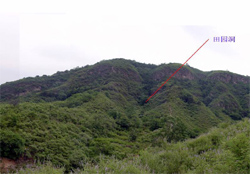
A research team led by Prof. LONG Hao from the Nanjing Institute of Geography and Limnology of the Chinese Academy of Sciences, drilled a 300.8-meter-long lacustrine sediment core in the Datong Basin of Shanxi Province, located in mid-latitude East Asia (Northern China). By reconstructing over 5.7 million years of Earth's history, the researchers revealed that the "waviness" of the Westerly Jet Stream is the primary driver of mid-latitude climate variability. The study was recently published in Nature Communications.
This sediment core acts as a detailed "climate archive," documenting precipitation changes over approximately 5.7 million years—spanning the Pliocene and Pleistocene epochs. By analyzing chemical indicators within the core, the researchers obtained a high-resolution record of ancient precipitation patterns.
During the warm Pliocene epoch (prior to approximately three million years ago), precipitation variability in mid-latitude regions was significantly higher than in the subsequent Pleistocene epoch (the Ice Age). The researchers attribute this drastic climate fluctuation to enhanced waviness of the Westerly Jet Stream. Further idealized sensitivity simulations indicated that Arctic warming was the force driving the Westerly Jet Stream to become more "wavy."
When the Arctic is cold, the polar vortex is strong, and the Westerly Jet Stream remains stable and straight. Cold air is effectively confined to high latitudes, resulting in relatively stable mid-latitude climates.
In contrast, Arctic warming weakens the polar vortex, causing the Westerly Jet Stream to become sinuous. This meandering allows cold and warm air masses to frequently intermingle and move northward and southward, leading to more frequent extreme wet and dry events in mid-latitudes and thereby amplifying hydroclimatic variability.
Additionally, the study ruled out atmospheric carbon dioxide (CO2) concentration as the dominant driver of this variability, confirming that Westerly Jet Stream waviness is the key factor.
"Based on ancient climate records, this study is crucial for understanding future climate change," Prof. LONG said. "Given that future global warming is projected to increase Westerly Jet Stream waviness, it is reasonable to predict that mid-latitude regions will face more frequent hydroclimatic extreme events, such as severe droughts and floods."

86-10-68597521 (day)
86-10-68597289 (night)

52 Sanlihe Rd., Xicheng District,
Beijing, China (100864)
Copyright © 2002 - Chinese Academy of Sciences